Search This Blog

10 May 2011

Why kids need recess and exercise

More and more researchers, educators, and parents are realizing that not only is playground time good for kids-it is crucial. Here's why it just may be the fourth "R" in school, and what you can do to make sure your child gets a healthy dose of downtime.

Let me put this out there: I totally get it. Teachers are under pressure to make sure they've drilled reading, 'riting, and 'rithmetic deep into their students' brains -- and there are only so many hours in the school day.

So if you have to get rid of an "extra" activity to make way for more book time -- well, you might as well go for the playtime. After all, school is supposed to be about learning, right? And what mom doesn't want her kid to ace The Test?

Still, I could see the toll it was taking on my daughter Mari, when, two weeks before fourth-grade testing, she dragged herself off the bus and into our kitchen -- exhausted, tense, and frazzled.

Turns out the only break she'd had during her six-and-a-half-hour school day was for a 22-minute lunch (quiet talking only). Recess had been "suspended" for two weeks so the teachers could get in extra test prep--and by this point Mari hadn't seen the monkey bars, bounced across a hopscotch board, or breathed fresh air for days.

When Exercise Is Too Much of a Good Thing

Recently, researchers in Britain set out to study the heart health of a group of dauntingly fit older athletes. Uninterested in sluggards, the scientists recruited only men who had been part of a British national or Olympic team in distance running or rowing, as well as members of the extremely selective 100 Marathon club, which admits runners who, as you might have guessed, have completed at least a hundred marathons.

All of the men had trained and competed throughout their adult lives and continued to work out strenuously. Twelve were age 50 or older, with the oldest age 67; another 17 were relative striplings, ages 26 to 40. The scientists also gathered a group of 20 healthy men over 50, none of them endurance athletes, for comparison. The different groups underwent a new type of magnetic resonance imaging of their hearts that identifies very early signs of fibrosis, or scarring, within the heart muscle. Fibrosis, if it becomes severe, can lead to stiffening or thickening of portions of the heart, which can contribute to irregular heart function and, eventually, heart failure.

The results, published online a few weeks ago in The Journal of Applied Physiology, were rather disquieting. None of the younger athletes or the older nonathletes had fibrosis in their hearts. But half of the older lifelong athletes showed some heart muscle scarring. The affected men were, in each case, those who’d trained the longest and hardest. Spending more years exercising strenuously or completing more marathon or ultramarathon races was, in this study, associated with a greater likelihood of heart damage.

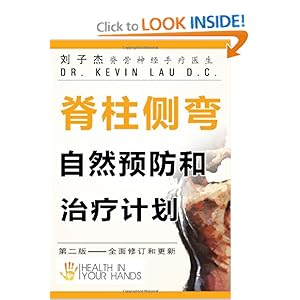
脊柱自然预防和治疗计划

 一个用于治疗和预防脊柱侧弯症的完全自然、安全和经过验证的饮食和锻炼方案!

而且,该方案完全针对你的脊柱和代谢需要而制定

  • 展示了造成脊柱侧弯真正原因的最新研究
  • 揭示了支具和手术疗法仅治疗脊柱侧弯的症状,而非根本原因
  • 发掘了哪些最新的疗法有效、哪些无效,以及为什么
  • 揭示了缺乏适当的营养是如何导致疾病在我们体内产生和影响脊柱正常生长的
  • 制定适合你脊柱的独特锻炼例程,即使最繁忙的日程安排亦可适用
  • 明确出你期待从医生和/或其他医疗专家那里获取什么
  • 提供了全面系统的图、表和清单,便于读者理解和领悟
  • 从其他脊柱侧弯症患者鼓舞人心的故事和病例研究中学习
经过数年的实践和潜心研究,刘医生去伪存真。在本部书中,他揭穿了一个又一个流行的荒诞说法,并探索了什么方法有效,脊柱侧弯症患者可有什么替代疗法,以及如何创建一个综合计划以达到身体和脊柱健康的高峰。

澳大利亚原住民和非洲土著部落中很少有脊柱侧弯症患者,受到他们非凡恢复能力的启示,刘医生提出了一个易于遵循、且已临床验证了的治疗方案,该疗法追溯到我们身体的原始构造机能以及生存的需求。通过简单地遵循三步法,本部书将引领您走上完全康复之路。

学习三步法矫正您的脊柱侧弯

步骤1:明确病因
你需要做的第一件事情是,确定出造成你脊柱侧弯的生化和结构失衡。你可在本书中所概述的一系列“自我评估”的帮助下,很容易地完成该步骤。

步骤2:治疗脊柱侧弯的症状
虽然大多数患者在早期并不表现出任何疼痛的症状,但是随着病情的进展或年龄的增加,这些症状逐渐变得明显。如果疼痛非常严重,以至于你不能移动任何肌肉,那么你无法纠正问题。本书将提供各种策略,以帮助你减轻和控制疼痛,这样可使你集中于矫正根本的功能障碍,它是造成你脊柱侧弯的主要原因。

步骤3:治疗疾病和造成疾病的根源
在这一步骤当中,遵循针对你特定疾病所制定的营养和锻炼计划,你将学会如何通过纠正你身体化学和结构失衡来治疗脊柱侧弯的起因。

关于作者

获得脊骨神经治疗医师学位和整体营养学硕士学位的刘子杰博士,在他的自我康复理念的支持下,将所学这两门学科相结合,并投入自然和预防医学的实践中。作为一位非手术脊柱侧弯矫正领域的先驱,刘子杰医生已经治疗了数以千计的脊柱侧弯症患者,他最终无可置疑地发现了开创性研究成果   脊柱侧弯真正的解决方案。

专家和患者的推荐

“我强烈推荐刘医生的自然疗法方案,它可有效、更好的替代传统的支具疗法和手术治疗。该方案的治疗结果给我留下了非常深刻的印象!我认为每一个脊柱专科医生都将在这本书中发现有价值的信息。”
关艾伦,整骨医科主任 

“治疗结果远远超出了我对脊柱侧弯矫正的预期。更好的是,我避免了手术!”
许露西

'Bad' Cholesterol Not as Bad as People Think, Study Shows

ScienceDaily (May 8, 2011) — The so-called "bad cholesterol" -- low-density lipoprotein commonly called LDL -- may not be so bad after all, shows a Texas A&M University study that casts new light on the cholesterol debate, particularly among adults who exercise.

Steve Riechman, a researcher in the Department of Health and Kinesiology, says the study reveals that LDL is not the evil Darth Vader of health it has been made out to be in recent years and that new attitudes need to be adopted in regards to the substance. His work, with help from colleagues from the University of Pittsburgh, Kent State University, the Johns Hopkins Weight Management Center and the Northern Ontario School of Medicine, is published in the Journal of Gerontology.

9 May 2011

Why Wood Pulp Makes Ice Cream Creamier

What is often in shredded cheese besides cheese?

Powdered cellulose: minuscule pieces of wood pulp or other plant fibers that coat the cheese and keep it from clumping by blocking out moisture.

One of an array of factory-made additives, cellulose is increasingly used by the processed-food industry, producers say. Food-product makers use it to thicken or stabilize foods, replace fat and boost fiber content, and cut the need for ingredients like oil or flour, which are getting more expensive.

Cellulose products, gums and fibers allow food manufactures to offer white bread with high dietary fiber content, low-fat ice cream that still feels creamy on the tongue, and allow cooks to sprinkle cheese over their dinner without taking time to shred.

Cellulose additives belong to a family of substances known as hydrocolloids that act in various ways with water, such as creating gels.

The rising cost of raw materials like flour, sugar and oil is helping boost the popularity of these additives, producers of the ingredients say.

Demand for cellulose is also rising because of the growing popularity of processed food products in China, India and other countries, and because consumers are demanding low-fat or nonfat foods that still have a creamy texture.

While some food manufactures say they aren't increasing the percentage of cellulose in their products, others are boosting the amount of fiber in their foods with cellulose and other ingredients. Companies can save money by using it, even though it costs more by weight than conventional ingredients. Cellulose gives food "more water, more air, a creamy feeling in [the] mouth with less of other ingredients," and only a very small amount is needed, says Niels Thestrup, vice president of the hydrocolloids department for Danisco AS. The Copenhagen-based company makes ingredients and enzymes for food, cleaning supplies and other products.

Cellulose is especially popular because it can be used in many ways in food and is relatively inexpensive at about $2.50 to $3 a pound for one type his company makes, says Mr. Thestrup. The company's sales of hydrocolloids had been rising 3% to 5% a year over the past decade, but in the past two years, sales are up about 6% to 8%.

Even organic-food products can contain cellulose.

Organic Valley uses powdered cellulose made from wood pulp in its shredded-cheese products. The company would prefer not to use a synthetic ingredient, but cellulose is bland, white and repels moisture, making it the favored choice over products such as potato starch, says Tripp Hughes, director of product marketing for Organic Valley.

Only powdered cellulose in its least manipulated form can be used in foods labeled "organic" or "made with organic" ingredients by the U.S. Department of Agriculture.

Cellulose comes in various forms, each with a specific use. Beyond powdered cellulose, two other modified forms are common in food. Microcrystalline cellulose is either listed as such on labels, as MCC, or in some cases as cellulose gel. Carboxymethyl cellulose or cellulose gum, another modified version, is listed as such on labels. Each gives foods a slightly different texture—from gelatinous to more liquid-like—because they trap varying amounts of air or water.

Powdered cellulose is made by cooking raw plant fiber—usually wood—in various chemicals to separate the cellulose, and then purified. Modified versions go through extra processing, such as exposing them to acid to further break down the fiber.

Lack of sleep found to be a new risk factor for colon cancer

An inadequate amount of sleep has been associated with higher risks of obesity, heart disease, diabetes, and death. Now colon cancer can be added to the list.

In a ground-breaking new study published in the Feb. 15, 2011 issue of the journal Cancer, researchers from University Hospitals (UH) Case Medical Center and Case Western Reserve University School of Medicine, found that individuals who averaged less than six hours of sleep at night had an almost 50 percent increase in the risk of colorectal adenomas compared with individuals sleeping at least seven hours per night. Adenomas are a precursor to cancer tumors, and left untreated, they can turn malignant.

"To our knowledge, this is the first study to report a significant association of sleep duration and colorectal adenomas," said Li Li, MD, PhD, the study's principal investigator, family medicine physician in the Department of Family Medicine at UH Case Medical Center and Associate Professor of Family Medicine, Epidemiology and Biostatistics at Case Western Reserve University School of Medicine. "A short amount of sleep can now be viewed as a new risk factor for the development of the development of colon cancer."

In the study, patients were surveyed by phone prior to coming into the hospital for scheduled colonoscopies at UH Case Medical Center. They were asked demographic information as well as questions from the Pittsburg Sleep Quality Index (PSQI), which obtains information about the patient's overall sleep quality during the past month. The PSQI asks for such information as how frequently one has trouble sleeping and how much sleep one has had per night. The study was funded by the National Cancer Institute through Case Western Reserve University School of Medicine.

Of the 1,240 patients, 338 were diagnosed with colorectal adenomas at their colonoscopy. The patients with adenomas were found in general to have reported sleeping less than six hours compared to compared to those patients without adenomas (control) patients, and the association between amount of sleep and adenomas remained even when adjusted for family history, smoking, and waist-to-hip ratio (a measurement of obesity).

The researchers also found a slightly stronger association of sleep duration with adenomas with women compared to men, but the difference was not statistically significant.

Dr Li said the magnitude of the increase in risk due to less hours of sleep is comparable to the risk associated with having a first-degree relative (parent or sibling) with colon cancer, as well as with high, red meat intake. "Short sleep duration is a public health hazard leading not only to obesity, diabetes and coronary heart disease, but also, as we now have shown in this study, colon adenomas," he said. "Effective intervention to increase duration of sleep and improve quality of sleep could be an under-appreciated avenue for prevention of colorectal cancer."

Although why fewer hours of sleep may lead to colon cancer is unknown, Dr. Li said some of theories include that less sleep may mean less production of melatonin, a natural hormone that in animals has been linked to DNA repair, or that insulin resistance may underlie the link between sleep disturbance and cancer development.

6 May 2011

Does Soda Cause Gout?

Sugary sodas have recently been implicated in everything from obesity to high blood pressure. But if you’re worried about gout, it may be especially important to steer clear of the sweet stuff.

Ongoing research has examined the relationship between rising soft drink consumption and an increase in gout. Consider this: The number of people with gout back in the 1970s was 20 per 100,000. By the mid-1990s, that number had more than doubled to 45.9 per 100,000. Likewise, soda consumption among adults rose by 61 percent from 1977 to 1997.

This link between soda intake and gout makes sense since the "source of almost all of the sweetness in sugary drinks comes from fructose — and fructose elevates uric acid levels, [leading to] gout," explains Hyon Choi, MD, DrPH, clinical associate professor of medicine in the rheumatology section at Boston University School of Medicine. Dr. Choi also points out that fructose is used to make high-fructose corn syrup, a substance commonly used to sweeten many foods and beverages besides soda.

Soda and Gout: The Link

Uric acid is usually filtered by the kidneys and excreted from your body in your urine. Gout occurs when uric acid builds up in the blood, causing uric acid crystals to form in one or more joints and leading to intense pain and swelling. There are a number of factors that can cause elevated uric acid levels, including heavy fructose consumption.

Choi's research has shown that study participants who consumed two or more servings of sugar- or fructose-sweetened soda each day had an 85 percent increased risk of developing gout, compared with participants who consumed less than one serving of sugary soda per month. Even sugary fruit juice, such as orange juice, raises the risk.

If diet soda is your vice, you may not have to worry as much about developing gout. "With diet soda, we did not find the association," Choi says.

Choi and his colleagues did find a slight increase in gout risk with consuming high-fructose fruits, such as apples and oranges. However, Choi emphasizes, artificially added fructose found in soda is linked to a higher risk of gout than naturally occurring sources of fructose like fruit.

Soda and Gout: What This Means for You

Traditionally, gout prevention strategies have focused on limiting protein-rich foods and alcohol, which can encourage uric acid accumulation in the body. This new research, however, suggests that cutting back on soda consumption may be just as important in preventing future gout attacks.

Also keep in mind that in the United States, the biggest single source of calories is soda sweetened with sugar or fructose. This means that beyond reducing your risk of developing gout, avoiding the empty calories in soda may also help you shed excess weight and keep your blood sugar levels in check. So instead of reaching for another soda or sugar-sweetened drink at your next meal, opt for water instead — your joints will thank you.

3 May 2011

Chiropractic Management of Pain in a Young Scoliosis Patient

By Nancy Martin-Molina, DC, QME, MBA
Case History
The patient is a 14-year-old girl with a recent diagnosis of scoliosis received on medical referral.

She reports her actual pain onset started at menarche around 11-12 years of age, worsening in the past 6-9 months, during which time she underwent a growth spurt.  Written parental consent is obtained and an initial evaluation is provided with radiographic spinal record review performed. She hand-carried her medical radiograph report, dated six months prior.
The patient's complaint on pain drawing is neck / mid-back / low back / midline; the pain level was rated as a 6-7/10; severe on a scale of 1-10 with 10 being severe pain with moderate interference in activities of daily living. The quality of the pain is as follows: aches at suboccipital to upper dorsal, stabbing intrascapular, aches low back. Provocative: daily ADL. Palliative: nothing; mother has tried administering Tylenol. Source: oral history and pain.
Evaluation & Findings

Scoliosis Prevalence Increases With Age

29 April 2011

Low vitamin D levels linked to diabetes risk

NEW YORK — Lower levels of vitamin D circulating in the bloodstream are tied to a higher risk of developing diabetes in a new study of Australian adults.

After following more than 5,000 people for 5 years, the researchers found those with lower than average vitamin D levels had a 57 percent increased risk of developing type 2 diabetes compared with people with levels in the recommended range.

"Studies like ours have suggested that blood levels of vitamin D higher than what is recommended for bone health may be necessary to reduce the risk of developing type 2 diabetes," said lead author Dr. Claudia Gagnon, a fellow at the Western Hospital at the University of Melbourne in Australia, where the study was done.

Vitamin D is manufactured by the body in response to sunlight and also occurs naturally in some foods, like eggs, cod and salmon. The vitamin is best known for its role in working with calcium to build bones.

The Institute of Medicine recommends that adults get about 600 IU of vitamin D a day to maintain circulating levels in the desirable range.

Past studies have shown that vitamin D may also help keep blood sugar levels under control. In type 2 diabetes, the most common form of the disease, the body can't use insulin it produces efficiently to control blood sugar levels. Vitamin D may play a role by increasing the release of insulin, Gagnon said.

To see whether circulating D levels and calcium consumption influenced insulin sensitivity and diabetes risk, Gagnon's team measured the vitamin D blood levels of 5,200 people without diabetes. After 5 years, about 200 of them had developed diabetes, and the researchers measured everyone's vitamin D levels again.

Risk of diabetes rises 57 percent
The researchers found that twice as many people — 6 in 100 — with low blood levels of vitamin D later developed diabetes, compared to those with blood levels in the normal range —3 in 100.

When the researchers took into consideration risk factors for diabetes such as age, waist circumference, and a family history of the disease, the increased risk from low D levels translated to 57 percent, relative to those with higher levels.

Calcium is also thought to participate in insulin release, but the researchers found no link between the mineral and risk of developing diabetes later.

"Lower levels of vitamin D in the blood were associated with an increased risk of developing type 2 diabetes," Gagnon told Reuters Health by e-mail. "However, our findings do not prove cause and effect."

Further studies are needed, Gagnon's group writes in the journal Diabetes Care, both to directly test whether vitamin D supplements make a difference in diabetes risk, and if so, to determine the optimal circulating D levels to minimize that risk.

It's hard to know what exactly the link between vitamin D and diabetes is, Dr. Ian de Boer, assistant professor of medicine at the University of Washington in Seattle, told Reuters Health.

Obesity, inactivity may be factors
But obesity and inactivity, the highest risk factors for type 2 diabetes, may be the cause of low vitamin D levels, said de Boer, who did not work on the Australian study.

Vitamin D has also been linked to lower risks of asthma, heart disease, and certain cancers. However, there hasn't been much evidence showing that taking supplements helps these conditions.

Vitamin D is widely available for less than $10 for a 2-month supply.

The sun is the major vitamin D source for most people, but salmon and fortified dairy products also contain a lot, de Boer added.

The best ways to reduce diabetes risk are still to exercise and eat a healthy diet, he said.

"I don't think there's conclusive information that supplementing with vitamin D reduces diabetes risk," de Boer said.

ShareThis