(NaturalNews) Right on time; flu season is once again upon us, and no doubt you're already getting bombarded with calls to get your "flu shot" so you can be "protected" from this year's strain of influenza.
Well, you can do that if you choose, or you can take a more proactive approach to warding off the bugs and viruses this year by employing probiotics to help defend you.
What are probiotics? Simply put, it is the good bacteria that resides in your gut and battles infection caused by viruses, yeast, fungi and parasites. And it, like bad bacteria, is killed off with antibiotics, often leaving you more vulnerable for the next bug that comes along.

24 December 2012


21 December 2012
Importance of Magnesium is Far Greater than Previously Imagined
By Dr. Mercola
You don't hear much about magnesium, yet an estimated 80 percent of Americans are deficient in this important mineral and the health consequences of deficiency are significant. One reason could be because magnesium, like vitamin D, serves so many functions it's hard to corral.As reported by GreenMedInfo1, researchers have now detected 3,751 magnesium binding sites on human proteins, indicating that its role in human health and disease may have been vastly underestimated.Magnesium is also found in more than 300 different enzymes in your body, which are responsible for:
Creation of ATP (adenosine triphospate), the energy molecules of your body Proper formation of bones and teeth Relaxation of blood vessels Action of your heart muscle Promotion of proper bowel function Regulation of blood sugar levels
The Health Benefits of Magnesium have Been Vastly Underestimated
A number of studies have previously shown magnesium can benefit your blood pressure and help prevent sudden cardiac arrest, heart attack, and stroke. For example, one meta-analysis published earlier this year in the American Journal of Clinical Nutrition2 looked at a total of seven studies collectively covering more than 240,000 participants. The results showed that dietary magnesium intake is inversely associated with risk of ischemic stroke.
17 December 2012
What You Need to Know About Vitamin K2, D and Calcium
By Dr. Mercola
Vitamin K is a fat-soluble vitamin most well known for the important role it plays in blood clotting. However, many do not realize that there are different kinds of vitamin K, and they are completely different.The health benefits of vitamin K2 go far beyond blood clotting, which is done by vitamin K1, and vitamin K2 also works synergistically with a number of other nutrients, including calcium and vitamin D.Dr. Kate Rheaume-Bleue, a naturopathic physician with a keen interest in nutrition, has authored what I believe is one of the most comprehensive books on this important topic, titled: Vitamin K2 and the Calcium Paradox: How a Little Known Vitamin Could Save Your Life"I tuned in to the emerging research about K2 early in 2007," she says. "Not long before, I had read Nutrition and Physical Degeneration by Weston A. Price. When I learned about vitamin K2, I thought:"Hey, you know what? I'm sure Price talked all about this in his book." I went to the book, looked through it, and didn't find any reference to vitamin K2. I was really stumped.A little bit later in 2007, I read a brilliant article by Chris Masterjohn that links vitamin K2 to Prices' work on Activator X.Once I realized that link, the light bulb went on about how important this nutrient is, and how overlooked it's been for so long. It really provides the missing piece to the puzzle of so many health conditions, and yet it was being completely overlooked, despite the overwhelming amounts of modern-day research."
5 December 2012
Artificial Sweeteners Cause Greater Weight Gain than Sugar, Yet Another Study Reveals
By Dr. Mercola
Are you using artificial sweeteners and opting for low-cal "diet" foods in an effort to control of your weight?If so, you may be surprised to learn that research has repeatedly shown that artificial no- or low-calorie sweeteners are anything but good news for weight loss... Contrary to popular belief, studies have found that artificial sweeteners such as aspartame can:
- Stimulate your appetite
- Increase carbohydrate cravings
- Stimulate fat storage and weight gain
Now, yet another study1 has been published showing that saccharin andaspartame cause greater weight gain than sugar.The belief that artificially sweetened foods and beverages will help you lose weight is a carefully orchestrated deception. So if you are still opting for "diet" choices for this reason, you are being sorely misled. Ditto for diabetics, as recent research has shown aspartame also worsens insulin sensitivity.The fact that these are still being promoted as "diet" flies in the face of any rational behavior. One wonders why the FTC doesn't come down like a ton of bricks on these companies for massively fraudulent marketing.
New Study Negates Weight Management Claims of Artificial Sweeteners
The featured study, published in the January 2013 issue of the journal Appetite2, was done by a Brazilian research team with the Faculty of Medicine of the Federal University do Rio Grande do Sul. Rats were fed plain yogurt sweetened with either aspartame, saccharin, or sugar, plus their regular rat chow, for 12 weeks."Results showed that addition of either saccharin or aspartame to yogurt resulted in increased weight gain compared to addition of sucrose, however total caloric intake was similar among groups," the researchers write.3The reason for the similar calorie consumption between the groups was due to increased chow consumption by the rats given artificially sweetened yoghurt. This type of compensation has been found in previous studies4 as well, indicating that when your body gets a hit of sweet taste without the calories to go with it, it adversely affects your appetite control mechanisms, causing increased food cravings. The authors concluded that:"Greater weight gain was promoted by the use of saccharin or aspartame, compared with sucrose, and this weight gain was unrelated to caloric intake. We speculate that a decrease in energy expenditure or increase in fluid retention might be involved."
3 December 2012
Exercise Helps Your Immune System Protect Against Future Cancers
By Dr. Mercola
If you are like most people, when you think of reducing your risk of cancer, exercise probably isn't at the top of your list. However, there is compelling evidence that exercise can not only help slash your risk of cancer, but can also help cancer patients get well sooner, and help prevent cancer recurrence.Research has also shown it may help minimize the side effects of conventional cancer treatment.A preliminary study presented at The Integrative Biology of Exercise VI meeting in mid-October1 helps shed light on why exercise is so effective for decreasing the risk of secondary cancers in survivors, or why it can decrease your risk of getting cancer in the first place.
Exercise Improves Your Immune System's "Cancer Surveillance"
29 November 2012
The Soda Ban Debate: What Does It Mean for Your Health?
The New York City Board of Health will decide this week whether to implement Mayor Michael Bloomberg's controversial proposal to limit the sale of super-sized sodas.

15 November 2012

14 November 2012
Solving the Mystery of Aging: Longevity Gene Makes Hydra Immortal and Humans Grow Older
ScienceDaily (Nov. 13, 2012) — Why do we get older? When do we die and why? Is there a life without aging? For centuries, science has been fascinated by these questions. Now researchers from Kiel (Germany) have examined why the polyp Hydra is immortal -- and unexpectedly discovered a link to aging in humans.
23 October 2012
Chiropractic vs. Medical Management of Scoliosis: Let's Look at the Numbers
By Mark Studin, DC, FASBE(C), DAAPM, DAAMLP
For more than 100 years, chiropractors have been treating adolescents with idiopathic scoliosis. Both myself and my colleagues, current and former, have realized and reported within the profession remarkable and often dramatic positive results.
But only recently has the viability of chiropractic treatment for scoliosis been documented through research and reported in the indexed medical literature.
According to the Mayo Clinic, "Scoliosis is a sideways curvature of the spine that occurs most often during the growth spurt just before puberty. While scoliosis can be caused by conditions such as cerebral palsy and muscular dystrophy, the cause of most scoliosis is unknown. Most cases of scoliosis are mild, but severe scoliosis can be disabling. An especially severe spinal curve can reduce the amount of space within the chest, making it difficult for the lungs to function properly. Children who have mild scoliosis are monitored closely, usually with X-rays, to see if the curve is getting worse. In many cases, no treatment is necessary. Some children will need to wear a brace to stop the curve from worsening. Others may need surgery to straighten severe cases of scoliosis."1
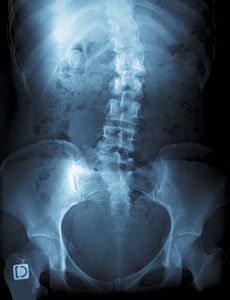 Three-dimensional lateral curvatures of the spine affect 2-3 percent of the adolescent population.2Utilizing 2000 U.S. Census Bureau statistics, the number of adolescents in the United States is 41,747,962. If 2.5 percent of all adolescents have scoliosis based on the 2-3 percent estimate, this equates to 1,043,699 (1.04 million) children facing issues as a result of scoliosis.3 Yet keep in mind that "only 10% of adolescents diagnosed with scoliosis have curve progression requiring medical intervention."4
Lou, et al., state: "Brace (orthotic) treatment is recommended for growing children with curves of 25-45 [degrees] Cobb angle. Surgery is the final treatment option for curves greater than 45° and its goals are to obtain safe correction, to produce a solid spinal fusion of the curve region, and to bring the spine and body into a more balanced position."2However, they conclude, "Although brace treatment for scoliosis has been used for more than fifty years, its effectiveness is still debatable. ... Most studies used the amount of curve progression (as measured by the Cobb angle) to determine the effectiveness of brace treatment. Some defined success as 5° or less curve progression."2
Bracing in adolescent males had unsuccessful results in 76 percent of the cases, with 46 percent requiring surgery for idiopathic scoliosis.2 The overall surgical rate for failed bracing was 23 percent when used as a treatment for idiopathic scoliosis.6 "A retrospective review of 16,536 individual costs and charges, including overall reimbursements, for 125 consecutive patients who were managed surgically for the treatment of adolescent idiopathic scoliosis by three different surgeons between 2006 and 2007.... The mean age of the patients was 15.2 years." Costs ranged from $29,995 to $33,652, averaging $31,832.50 per case.7
The total number of hospital discharges in 2009 for idiopathic scoliosis for children under 18 years of age was 6,709. However, the estimated number of children undergoing spinal fusion was 38,000, with 85 percent being a result of idiopathic scoliosis. That means the total number of children being operated on is 32,300, with a national price tag of more than $1 billion ($1,028,189,750).
Scoliosis bracing is estimated to be used for 30,000 children. If we take the same statistic of 85 percent for idiopathic scoliosis, the approximate number of children braced for idiopathic scoliosis is 25,500. According to MG Labs, a prosthetic and orthotic lab in New York, the national average cost of a thoracolumbosacral orthosis is $2,100. That places the national cost for bracing at over $53 million ($53,550,000).
The estimated number of physician visits for scoliosis is 600,000.9 Again, if we take the 85 percent statistic for idiopathic scoliosis, the number of physician visits is 510,000. Omitting X-rays, MRIs and other required services for scoliosis, the average cost for a doctor's visit is conservatively $100, averaging both primary and specialist care. This would be for a range of E&M codes for initial visits including 99203-99204 and 99205. The national price tag is thus $51 million. (Note: For this review, we aren't considering the negative sequellae of radiation exposure for tracking the scoliosis as the adolescent matures.)
While allopathic medicine is still entrenched in the debatable practice of bracing and eventual surgery with the inevitable progression of scoliosis, there are proven solutions. A 2011 study concluded that as a result of chiropractic spinal adjusting and chiropractic spinal manipulation, a thoracolumbar curvature (scoliosis) averaged a 17.2° reduction that was maintained for 24 months, the length of the study. Across all spinal groups, an average 10° reduction persisted for 24 months, again the length of the study. It was also concluded that pain scales reduced by 60 percent at 24 months and function improved by 70 percent, while respiratory capacity increased by 7 percent.10
The real issue is that if adolescents have their curvatures reduced by between 10° and 17.2°, then a significant amount of bracing and surgery will no longer be an option because it will not be indicated. As bracing has been deemed questionable in the literature and now the literature reflects chiropractic as a highly effective modality, the standard of care across professions should be chiropractic care for scoliosis as the first-line treatment option and should be standardized in every discipline.
Considering the overall national cost of idiopathic scoliosis of $1,132,739,750 ($1.13 billion), excluding imaging studies and the research results on chiropractic care, the conclusion is that as a society our money can be better spent while simultaneously helping our children. The question remains, "Will politics and prejudice or facts rule the day?"
References
- Scoliosis: Definition. The Mayo Clinic, 2009.
- Lou E, Hill D, Hedden D, Mahood J, Moreau M, Raso J. An objective measurement of brace usage for the treatment of adolescent idiopathic scoliosis. Medical Engineering and Physics, 2010;33(3):290-294.
- ACT for Youth Center of Excellence. U.S. Teen Demographics, 2011.
- Lenssinck M, Frijlink AC, Berger MY, Bierma-Zeinstra SM, Verkerk K, Verhagen AP. Effect of bracing and other conservative interventions in the treatment of idiopathic scoliosis in adolescents: a systematic review of clinical trials. Physical Therapy,2005;85(12):1329-1339.
- Karol LA. Effectiveness of bracing in male patients with idiopathic scoliosis. Spine, 2001;26(18):2001-2005.
- Dolan LA, Weinstein SL. Surgical rates after observation and bracing for adolescent idiopathic scoliosis: an evidence-based review. Spine, 2007;32(19S):S91-S100.
- Kamerlink JR, Quirno M, Auerbach JC, Milby AH, Windsor L, Dean L, Lonner BS. Hospital cost analysis of adolescent idiopathic scoliosis correction surgery in 125 consecutive cases. The Journal of Bone and Joint Surgery, 2010;92 (5:1097-1104.
- U.S. Department of Health & Human Services, Agency for Healthcare Research and Quality. 2009 Hospital Stays for Children Only - Principal Only.
- National Scoliosis Foundation. Information and Support.
- Morningstar M. Outcomes for adult scoliosis patients receiving chiropractic rehabilitation: a 24-month retrospective analysis. Journal of Chiropractic Medicine, 2011;10(3):179-184.
Dr. Mark Studin is a 1981 graduate of New York Chiropractic College. He is the co-founder and former executive director of the New York Chiropractic Council. Currently, he is president of CMCS Management. Contact Dr. Studin with questions and comments regarding this article at drmarks380@aol.com .
25 September 2012
Vitamin D: Possible cure for baldness?
Researchers investigating what causes hair follicles to go dormant are helping lead us toward a potential cure for baldness.
Current treatments for baldness prevent further hair loss but don’t actually increase hair growth. Several research teams are working to uncover ways to “wake up” existing dormant hair follicles. Scientists are finding that vitamin D and vitamin D receptors are crucial to continuing hair growth.
Typical hair growth follows a cycle. Hair follicles produce hair for two to six years before the hair falls out after which the follicles lie dormant for a short period. After a few weeks to a few months a new hair emerges. Sometimes the hair follicles permanently stay “asleep”, resulting in baldness.
Research so far has been encouraging. Dr Kotaro Yoshimura and colleagues at the University of Tokyo studied rats and found more stem cells became hair follicles when vitamin D was used in the final phase of growing the cells, when compared with those not treated with vitamin D. They also found that more of the follicles eventually produced hair, suggesting a potential role for vitamin D in hair transplants.
The key is the vitamin D receptor, not vitamin D alone. The receptor activates hair growth, so the next step will be to focus on activating the vitamin D receptor to possibly initiate hair growth.
Dr Yoshimura and colleagues are currently planning a clinical trial which will investigate new hair transplantation techniques involving their recent vitamin D research.
To read the full story click here.
Source:
The Wall Street Journal. The search for a baldness cure. September 2012.
Subscribe to:
Posts (Atom)