Search This Blog

6 November 2006

The Vitamin D Newsletter


I want to alert readers to this month's groundbreaking study about atherosclerosis and vitamin D. Atherosclerosis is the disease process that leads to heart attacks and strokes. Dr. Targher and his group in Italy measured the amount of atherosclerotic plaque (carotid artery intimal thickness) and the vitamin D levels of 390 diabetic patients. The authors found low vitamin D blood levels were an independent and strong predicator of atherosclerosis. Professor Robert Scragg of the University of Auckland was right 16 years ago, when he discovered that low vitamin D levels are associated with heart attacks.
Targher G, et al. Serum 25-hydroxyvitamin D3 concentrations and carotid artery intima-media thickness among type 2 diabetic patients. Clin Endocrinol (Oxf). 2006 Nov;65(5):593-597.
Scragg R, et al. Myocardial infarction is inversely associated with plasma 25-hydroxyvitamin D3 levels: a community-based study. Int J Epidemiol. 1990 Sep;19(3):559-63.

Nature printed an article this week about our paper, Epidemic Influenza and Vitamin D. (You can obtain a free complete copy of our paper half way down the home page of the Vitamin D Council website.) I recommend that you take enough vitamin D this winter to keep your vitamin D level [25(OH)D] between 50 - 70 ngs/ml. For many people that means 5,000 IU per day in the winter. If you do, our hypothesis predicts that you will not be as likely to get viral respiratory infections, and if you do get sick, it will not be as severe. The vitamin D theory of influenza has two important strengths. It is parsimonious, that is, it explains many observations with a single mechanism. Most importantly, if our theory is false, it can easily be disproved.
Cannell JJ, Vieth R, Umhau JC, Holick MF, Grant WB, Madronich S, Garland CF, Giovannucci E. Epidemic influenza and vitamin D. Epidemiol Infect. 2006 Dec;134(6):1129-40.

31 October 2006

Kidney Cancer Study: Too Much Bread and Pasta?


Yet Another reason why I eliminate most grains and sugars from my diet.
------------------------------------------------------------------------
Using questionnaires, Italian researchers have found some evidence of an association between kidney cancer and the consumption of large amounts of bread, although the significance of the finding remains unclear.

The scientists used the responses to determine the eating habits of 767 men and women with kidney cancer who had been admitted to hospitals in Italy. They compared them to 1,534 people free of the disease who were admitted for other reasons. The subjects ranged in age from 24 to 79, with an average age of 62. The report appears online in The International Journal of Cancer.

The researchers found that the one-fifth of patients who consumed the most bread — 12 ounces or more a day — were almost twice as likely to suffer from kidney cancer as those who consumed 31/2 ounces or less.

Those who ate the most pasta (18 ounces or more) were almost one-third more likely to have kidney cancer than those who ate 8 ounces or less.

“This is only one study,” said Dr. Cristina Bosetti, a co-author of the paper and an epidemiologist at the Mario Negri Institute for Pharmacological Research in Milan, “and it has to be confirmed by other investigations.”

The authors also acknowledged that people diagnosed with cancer may recall their dietary habits differently from other people and that the interviewers knew which patients had kidney cancer and which did not.

Still, “it’s probably useful to reduce consumption of refined cereals,” Dr. Bosetti said, adding: “They tend to increase the quantities of sugar in the blood, and consequently the production of insulin, and insulin growth factors can be related to the development of cancer. But I would be quite cautious about giving advice about diet.”

Next Article in Health (9 of 13) »

13 October 2006

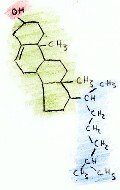
Cholesterol and optimal health


Debunking the Myths About Cholesterol
The idea that cholesterol is the cause of heart disease has been repeated so many times over the last half-century that most people assume it to be true without a second thought.

Now that statins, the cholesterol-lowering drugs, have begun to bring in a bonanza of profits for pharmaceutical companies, any new disease that can be pinned on cholesterol represents a chance to broaden the scope of profits ever more wide.

Alzheimer's disease
is now being blamed on cholesterol. Does the scientific evidence back it up? Or is it just another "cholesterol myth?"

Dr. Ravnskov and The Cholesterol Myths


Dr. Uffe Ravnskov, MD, PhD, coined the term "cholesterol myth" in his 2000 book
The Cholesterol Myths: Exposing the Fallacy That Saturated Fat and Cholesterol Cause Heart Disease.

Dr. Ravnksov's website on the cholesterol myths
details his credentials and summarizes his fascinating exposure of how nine myths about saturated fat, cholesterol, and heart disease came to be established orthodoxy without solid scientific evidence to back them up.


Despite Dr. Ravnskov's credentials, his meticulous research, and iron-clad arguments, his book has been so provocative, that it was literally set on fire on national TV in Finland!

Researchers Question the Cholesterol Myths
Dr. Ravnskov's ninth cholesterol myth is that all scientists support the position that dietary saturated fat and cholesterol cause heart disease. As Dr. Ravnskov shows, there have always been dissenters within the scientific community. One can take a principled stand against the idea that cholesterol causes heart disease and be in good scientific standing and in the company of many qualified researchers.

Some of the many medical doctors and researcher who question the relationship between cholesterol and heart disease and the general negative bias against cholesterol can be found at the website of
THINCS, The International Network of Cholesterol Skeptics.

7 October 2006

Vitamin D and cancer

Vitamin D is an extrememly important aspect in scoliosis correction and cancer prevention.

Studies discuss protective effects of Vitamin D and Cancer.

A study out of Albert Einstein College of Medicine suggests the potential protective effects of calcium and vitamin D on breast cancer. The report included:

1) serum, plasma, and/or blood levels of vitamin D metabolites have been inversely associated with breast cancer risk in some studies;
2) high sunlight exposure, presumably reflecting vitamin D synthesis in the skin, has been associated with a reduced risk of breast cancer;
3) vitamin D and calcium intakes have been inversely related to breast density, an intermediate end point for breast cancer;
4) calcium has been associated with a reduced risk of benign proliferative epithelial disorders of the breast, putative precursors of breast cancer;

4 October 2006

One Single Adjustment Benefits Neck Pain

A recent study performed in Spain has shown an immediate benefit from one adjustment in subjects with mechanical neck pain. A group of 70 patients with neck pain (25 males and 45 females, ages 20-55 years) participated in this study. The subjects were randomly divided into either an experimental group, which received an adjustment, or a control group, which received manual mobilization. The adjustment group showed a significant improvement in neck pain at rest and mobility after application of the manipulation. The control group also showed a significant improvement in neck pain at rest, flexion, extension, and both lateral flexions, but not in rotation. Results suggest that a single cervical HVLA manipulation is more effective in reducing neck pain at rest, and in increasing active cervical range of motion, than a control mobilization procedure in subjects suffering from mechanical neck pain.

Journal of Manipulative and Physiological Therapeutics 2006;29(7):511-517.

A Little Sun a Day Keeps Vitamin D Deficiency Away

Sunshine, aside from being good for your soul, adds a very important element into your life - vitamin D. The sun works with the skin to produce vitamin D in your body. Although other forms of vitamin D are in some of the foods we eat, they still need to be processed to gain the benefits.

A study published in the Archives of Disease in Childhood evaluated a group of adolescent girls in an inner city school in the United Kingdom for vitamin D deficiency. Fifty-one girls between the ages of 14 and 16 were chosen to participate in the study. After measuring weight, height and body mass, the researchers distributed a questionnaire that evaluated the girls' daily intake of vitamin D, calcium and sunlight.

Thirty-seven of the girls (73 percent) were found to be vitamin D deficient, while nine (17 percent) of the students were considered severely deficient.. The results indicated that the vitamin D deficiency was due to underexposure to sunlight.

Of course, too much sun can be a bad thing, particularly in terms of skin damage, so be careful. But a little a day can go a long way toward ensuring adequate intake of vitamin D.

Archives of Disease in Childhood, July 2006;91(7):569-572.

25 September 2006

Calcium for Kids

Also published on September 15th, but in the British Medical Journal, was an article indicating that getting children to supplement with calcium made no difference in bone density later in life. In summary, the study concluded, "Given the small treatment effects seen with calcium supplementation, however, it may be appropriate to explore possible alternative nutritional interventions, such as increasing vitamin D concentrations and intake of fruit and vegetables."

While a surprise to the researchers involved, in the study, this is hardly a surprise to those in the alternative health community who understand the true nature of bone density.

Perhaps in the next study, the researchers can analyze the effects of:

Increasing weight bearing exercise. (Lack of sufficient weight bearing exercise accelerates bone loss. Thus, increasing exercise helps reverse it.)
Insufficient boron and vitamin D3 contribute to bone loss.
Insufficient magnesium in the diet is probably more of a factor than insufficient calcium. A study in the Journal of Nutritional Medicine, 1991; 2:165-178, for example, showed that after nine months, women on magnesium supplements increased bone density by some 11%.
Increasing the amount of gamma linolenic acid and eicosapentaenoic acid in the diet helps increase bone density.
Avoiding fluoride in your drinking water is vital. Fluoride collects in the bones, and although it "technically" increases bone mass and density, the evidence is very strong that fluoride intake can actually double the incidence of hip fractures.
Using a natural progesterone creme (either men's or women's) can help.

17 September 2006

Lifetime high calcium intake increases osteoporotic fracture risk in old age

Thijs R. Klompmaker,
Groove Union Coop. U.A., van Hogendorpstraat 4, 1051 BP Amsterdam, Noord Holland, The Netherlands

Summary

Caloric restriction prolongs life span. Calcium restriction may preserve bone health.

In osteoporosis, bone mineral density (BMD) has significantly decreased, due to a lack of osteoblast bone formation. Traditional osteoporosis prevention is aimed at maximizing BMD, but the lifetime effects of continuously maintaining a high BMD on eventual bone health in old age, have not been studied. Strikingly, in countries with a high mean BMD, fracture rates in the elderly are significantly higher than in countries with a low mean BMD. Studies show that this is not based on genetic differences. Also, in primary hyperparathyroidism, on the brink of osteoporosis, BMD levels may be significantly higher than normal.

Maybe, BMD does not represent long term bone health, but merely momentary bone strength. And maybe, maintaining a high BMD might actually wear out bone health.

Since osteoporosis particularly occurs in the elderly, and because in osteoporotic bone less osteoblasts are available, the underlying process may have to do with ageing of osteoblastic cells.

In healthy subjects, osteoblastic bone cells respond to the influx of calcium by composing a matrix upon which calcium precipitates. In the process of creating this matrix, 50–70% of the involved osteoblasts die. The greater the influx of calcium, the greater osteoblast activity, and the greater osteoblast apoptosis rate. An increased osteoblast apoptosis rate leads to a decrease in the age-related osteoblast replicative capacity (ARORC). In comparison to healthy bone, in osteoporotic bone the decrease in the replicative capacity of osteoblastic cells is greater. Due to the eventual resulting lack of osteoblast activity, micro-fractures cannot be repaired. Continuously maintaining a high BMD comes with continuously high bone remodeling rates, which regionally exhaust the ARORC, eventually leading to irreparable microfractures.

Regarding long time influences on bone health, adequate estrogen levels are known to be protective against osteoporosis. This is generally attributed to its inhibiting influence on osteoclast activity. Instead, its net effects on osteoblast metabolism may be the key to osteoporosis prevention. Adequate estrogen levels inhibit osteoblast activity, calcium apposition and osteoblast apoptosis rate, preserving the ARORC.

Conclusion

Regarding osteoporosis prevention, ARORC better than BMD represents bone health. Regarding ARORC, adequate estrogen levels are protective, opposing the similar effects of hyperparathyroidism and a high calcium diet.

Tests need to be performed in mice to assess the lifetime effects of a high versus a low calcium diet, on eventual bone fracture toughness.

ShareThis